


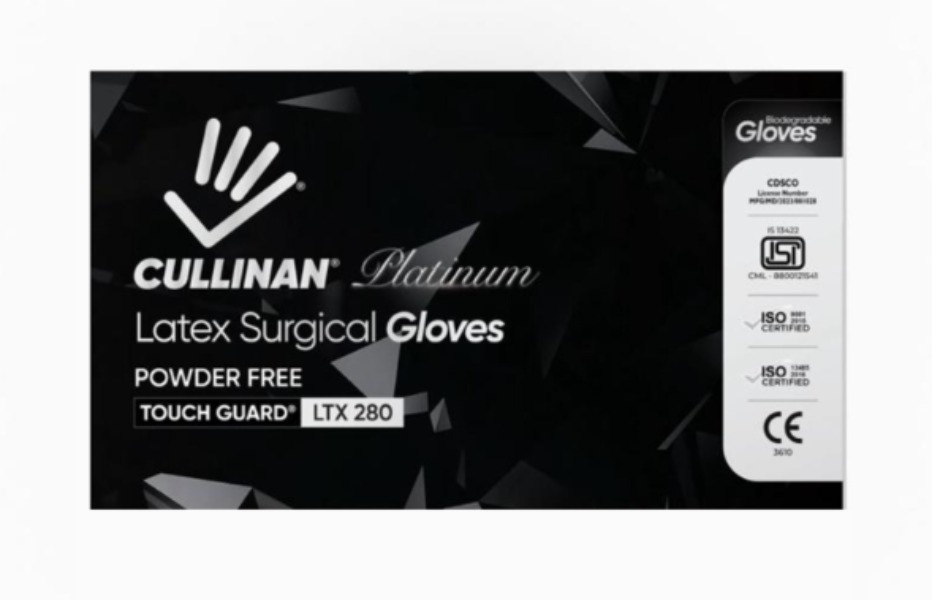
Healthcare procurement teams sometimes face a seemingly simple choice between powdered and powder-free surgical gloves. In practice, the decision requires a broader assessment of institutional policy, user requirements, material considerations, and applicable regulations. Buyers evaluating Cullinan Platinum Surgical Gloves - Powdered should compare the option carefully with powder-free alternatives before procurement.
Powder in surgical gloves has traditionally been associated with easier donning. Powder-free gloves, by contrast, are designed without donning powder and may be preferred or required under particular healthcare policies and regulatory environments.
The comparison should therefore begin with permitted use. Healthcare institutions must determine whether powdered surgical gloves are appropriate under current regulations, internal infection-control policies, occupational health requirements, and the intended clinical application.
Other comparison points include:
Donning characteristics: Powdered and powder-free products may feel different during donning. Buyers should evaluate this within the context of their facility's procedures.
Clinical environment: Glove selection should reflect the procedure and institutional protocol rather than general preference alone.
User sensitivity: Latex-containing products require consideration of latex sensitivity among healthcare workers and patients.
Fit and tactile response: Powder status does not by itself determine how well a glove fits or performs. Sizing, elasticity, construction, and surface characteristics remain important.
Procurement specifications: Product documentation, packaging, relevant standards, shelf life, storage requirements, and batch information should be reviewed for either option.
Hospitals in Noida, Uttar Pradesh, often purchase surgical consumables across several departments. Instead of allowing individual departments to order without coordination, procurement teams can establish a glove matrix showing approved product type, intended department, sizes, consumption rate, and minimum inventory.
This approach also helps prevent unnecessary stock fragmentation. Maintaining too many similar glove variants can complicate inventory management, while over-standardising without clinical consultation can result in products that do not suit particular users or procedures.
Ak Health Tech Private Limited manufactures Cullinan glove variants that can be evaluated according to institutional requirements. When assessing the Platinum powdered option, procurement teams should request and review the current product information relevant to their purchasing criteria.
Cost comparisons should also be made carefully. The lowest unit price does not necessarily represent the most appropriate procurement outcome if sizing is unsuitable, documentation is incomplete for institutional requirements, or stock planning creates wastage. Buyers should consider the complete purchasing picture.
Noida's location within the Delhi-NCR healthcare and distribution network makes organised procurement especially relevant for hospitals, medical suppliers, and institutional purchasers serving Uttar Pradesh and neighbouring markets.
The powdered-versus-powder-free question therefore has no universal answer independent of regulation and use context. A sound decision comes from reviewing permitted use, clinical application, staff requirements, product specifications, and facility policies together. This gives healthcare buyers a defensible basis for selecting the appropriate surgical glove rather than relying on habit or a single product characteristic.