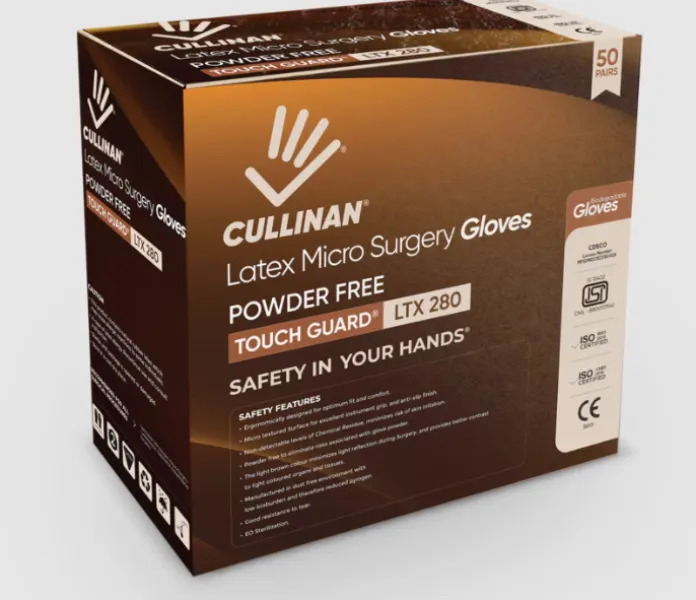
Microsurgical procedures place particular emphasis on controlled hand movements. When professionals are working with delicate instruments and small anatomical structures, glove selection becomes an important practical consideration. Cullinan Micro Surgery Gloves - Powder Free can be evaluated by healthcare institutions looking for surgical gloves intended for precision-oriented applications.
The key purchasing question is not simply whether a glove is labelled for microsurgery. Healthcare buyers need to determine how its specifications correspond to the intended procedure and the preferences of qualified clinical users.
Tactile sensitivity is one of the first factors to consider. Surgeons working in precision-oriented procedures may need clear feedback while handling fine instruments. Glove thickness, fit, material properties, and surface characteristics can all influence the user's tactile experience.
Accurate sizing is equally important. Excess material around the fingertips may interfere with fine handling, while a glove that is too tight can restrict natural hand movement. Hospitals should therefore make suitable sizes available rather than forcing users to work with whichever size happens to be in stock.
Other evaluation areas include:
- Anatomical fit and finger mobility
- Cuff coverage and compatibility with surgical attire
- Surface characteristics and instrument grip
- Powder-free construction
- Material and latex considerations
- Packaging integrity
- Relevant product documentation
- Storage and shelf-life requirements
Powder-free construction may be an institutional requirement for many healthcare environments. Even so, procurement teams should avoid treating 'powder free' as a complete quality assessment. The glove still needs to satisfy the facility's broader specifications.
Hospitals and specialty surgical centres in Noida, Uttar Pradesh, may perform procedures across ophthalmic, vascular, reconstructive, ENT, neurosurgical, and other precision-oriented specialties. Each facility should determine glove suitability according to the actual procedure and clinical protocols rather than assuming a single glove is appropriate for every microsurgical application.
Before standardising a product, procurement teams can establish a controlled evaluation process involving relevant clinicians, infection-control personnel, and purchasing staff. Feedback can be documented against defined criteria rather than relying on broad comments such as 'comfortable' or 'good quality.'
Ak Health Tech Private Limited manufactures the Cullinan range for healthcare and institutional requirements, including powder-free options intended for specialised glove needs. Noida-based procurement teams can assess current specifications and available sizes against their clinical requirements.
Inventory planning also matters for specialised gloves. Microsurgery products may have different consumption patterns from general surgical gloves. Maintaining realistic minimum and maximum stock levels can help prevent both shortages and unnecessary overstocking.
For healthcare organisations in Noida and the wider Uttar Pradesh market, selecting microsurgery gloves is ultimately about matching product characteristics to precision work. Appropriate fit, tactile requirements, documentation, storage, and clinical evaluation should guide the decision.
When those factors are reviewed systematically, specialised surgical glove procurement becomes more predictable and better aligned with the professionals who rely on the product during demanding procedures.
Keywords