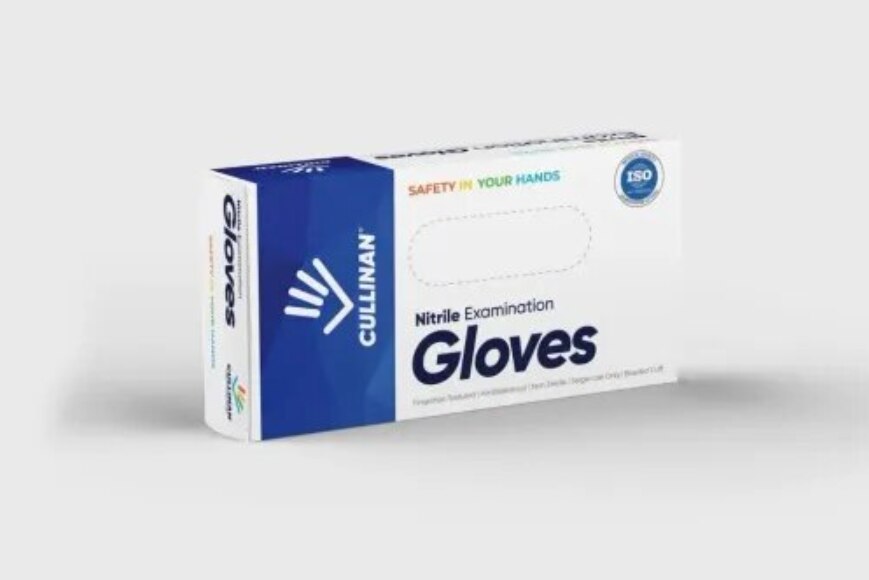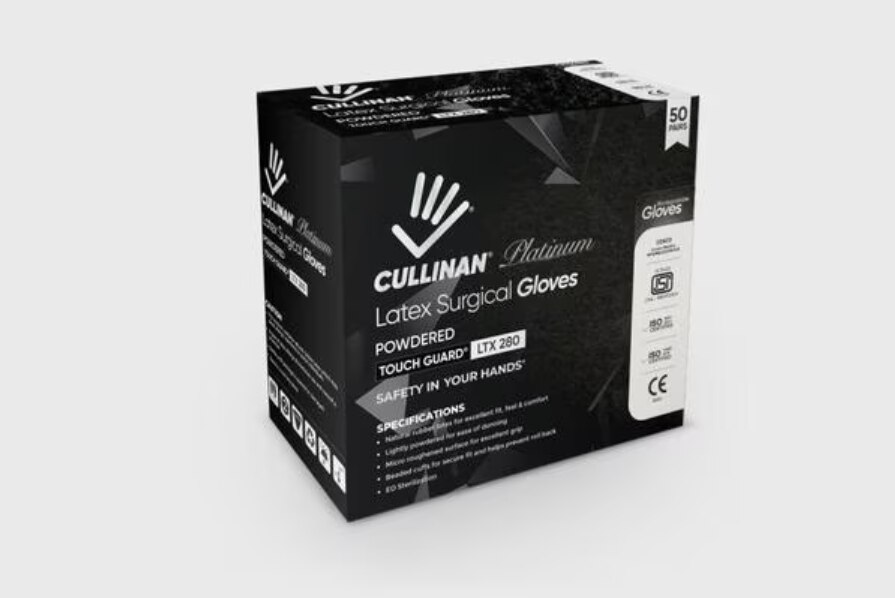
Powder-free status alone cannot show whether a glove is suitable for delicate gynaecological surgery. By checking sterility, material, fit, fingertip thickness, grip, cuff security and test documentation, you can decide whether a Cullinan glove matches the procedure rather than relying on the product name.
Key takeaways
- Confirm fingertip sensitivity, thickness, dexterity and tear resistance before approval.
- Request evidence for sterility, biocompatibility, barrier performance and lot traceability.
- Compare powder-free latex with nitrile for fit, allergies and tactile control.
- Reject packs with damaged seals, missing lot details or incorrect sizing.
What makes a powder-free glove suitable for delicate gynaecological surgery?
Powder-free status removes contamination and adhesion concerns, but it does not prove that a glove suits delicate surgery. A listing such as cullinan gynaecological gloves powder free for delicate surgical work deserves approval only after you check the glove’s fit, feel, dimensions and physical performance.
| Feature | What to check | Why it matters |
|---|---|---|
| Fingertips | Fingertip thickness in millimetres, not only “10% thinner” | A thinner tip can improve tissue and needle feedback, but reduces puncture and tear margin |
| Hand fit | Anatomical right- and left-hand design, size range and minimal excess material | Loose fingertips reduce instrument control and increase snagging |
| Grip | Textured or micro-textured fingertips and palm | A secure grip reduces forceful handling of wet instruments |
| Elasticity | Stretch and recovery across the stated size range | Poor recovery causes wrinkles, fatigue and pressure points |
| Cuff | Stated length and secure beaded edge | Adequate coverage limits wrist exposure and prevents roll-down |
| Integrity | Freedom-from-holes results, tear strength and acceptable dimensional variation | A thin glove still needs protection from needles, wires and instruments |
Do not treat cullinan gynaecological gloves powder free as proof of surgical suitability. Confirm sterile packaging, lot identification, sterilisation method and expiry information; ISO 10282 identifies sterile surgical gloves, while ISO 11193-1 covers single-use examination gloves. Clean your hands before donning and after removal because gloves can contain unnoticed defects and become contaminated during removal.
Powder-free is the safer baseline: the U.S. FDA banned powdered surgeon’s and examination gloves because powder can trigger reactions, promote adhesions and hinder wound healing.
How can you verify that a glove is truly designed for microsurgery?
The word “micro” proves nothing by itself. A true microsurgery glove should have documented fingertip and palm thickness, glove length, size dimensions, dimensional tolerances, and freedom-from-holes results under ISO 10282, the specification for sterile rubber surgical gloves.
Ask the supplier for these figures before approving powder free cullinan micro surgery gloves:
- Fingertip thickness in millimetres, measured at a stated location
- Nominal palm and cuff thickness, not only a general “thin glove” claim
- Length and width for each size, with permitted variation
- The test method, sample number, lot number, and report date
- AQL or equivalent freedom-from-holes performance for the finished sterile glove
There is no universal fingertip thickness that automatically makes a glove suitable for microsurgery. Compare the claimed micro glove with a standard surgical glove in the same size and material, using measurements taken at the same fingertip points.
A claim of “10% thinner” means the micro glove measures 0.90 times the reference thickness; it does not mean the package contains 10% less material.
Request the actual baseline and measured values. If a standard fingertip is 0.20 mm, a 10% reduction would be 0.18 mm, subject to the stated measurement tolerance. Confirm that the comparison uses finished gloves, not catalogue targets.
Thinner fingertips can improve tactile discrimination but reduce puncture and fatigue margin. Balance the data against needle, wire, bone and instrument hazards; powder-free status and latex-free status are separate claims.
Should you choose latex, powdered latex or powder-free nitrile?
Latex gives the closest hand-like stretch and strong tactile feedback, but powder-free nitrile is often the safer default when allergy and powder contamination matter.
| Option | Allergy risk | Tactile feel and stretch | Puncture resistance | Powder contamination |
|---|---|---|---|---|
| Powdered latex | Highest concern: natural-rubber proteins can trigger allergy, and powder spreads them | Excellent sensitivity, elasticity and fit | Good elasticity and tear resistance; performance depends on thickness | Highest; powder can contaminate tissue, promote adhesions and complicate wound healing |
| Powder-free latex | Still contains natural-rubber proteins, so “powder-free” does not mean latex-free | Usually the best stretch, conformity and fine-touch discrimination | Good tear resistance; a thinner fingertip reduces the puncture margin | No added powder, with less airborne and wound contamination risk |
| Powder-free nitrile | No natural-rubber latex proteins; assess sensitivity to synthetic materials separately | Good grip and durability, but often less elastic and less skin-conforming than latex | Strong puncture resistance, though thickness and formulation determine actual protection | No powder; polymer coating or chlorination can improve donning |
Choose powder-free latex when the team has confirmed latex suitability and maximum elasticity matters. Choose powder-free nitrile when latex exposure is unacceptable, but trial the glove with the needles, speculum and instruments used in the procedure; a stiff glove can reduce control.
A search for powder free surgical gloves india does not prove sterility or material composition. The label cullinan gynaecological gloves powder free also needs a technical sheet stating polymer, fingertip thickness and barrier tests. Avoid powdered gloves for invasive gynaecological or microsurgical work.
How should you check finishing, sizing and sterile packaging before use?
Reject the pair before donning it if the coating looks uneven, sticky, flaky or clumped. Powder-free does not mean residue-free: look for white dust, loose particles or visible film inside the glove, since residue can interfere with instruments and irritate tissue.
- Check the sterile pouch for a torn seal, puncture, moisture, staining or evidence of previous opening. Confirm the lot number, sterilisation information and expiry date; a damaged or wet pouch is a rejection, regardless of brand.
- Open the pack without contaminating the gloves. Confirm that the right and left gloves are correctly oriented, with no folded fingers, twisted cuffs or trapped material.
- Compare the size marking with your measured hand. The fingertips should end close to your own fingertips without pressure, while excess material at the tips reduces tactile control and can catch on instruments.
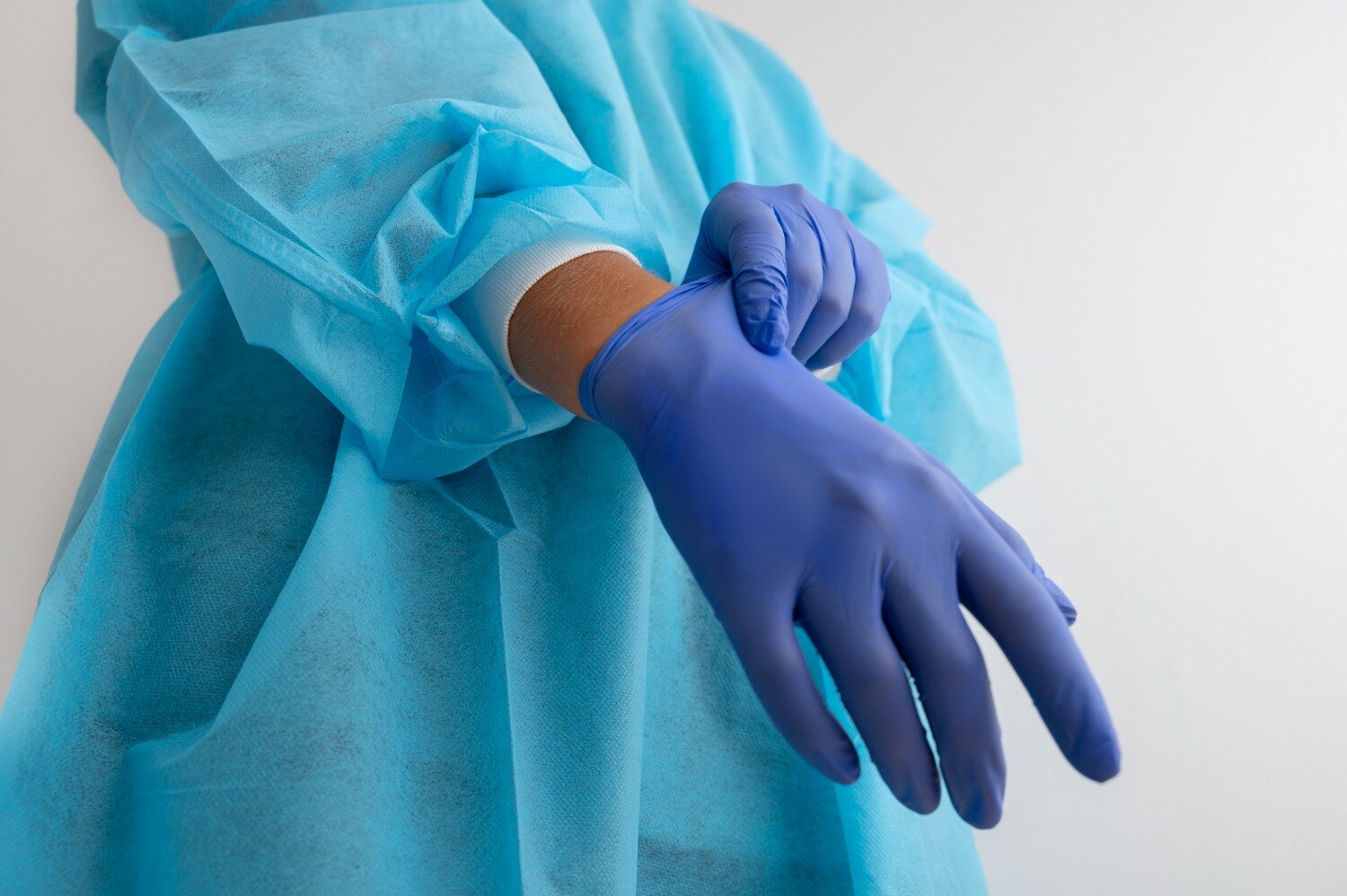
- Pull the cuff over the gown without rolling it down. It must cover the wrist securely and leave enough length for the gown-glove overlap; a short or loose cuff exposes skin during hand movement.
- Test finger conformity, wet and dry grip, and instrument control using the intended procedure. For micro surgery gloves for surgical centres, visible defects, poor grip or fingertip bunching disqualify the pair.
- If double gloving, assess the exact inner-and-outer combination for circulation, dexterity and cuff security. Do not assume that moving up one size preserves tactile control.
- Check chemical compatibility before use with surgical prep solutions, alcohols, lubricants, disinfectants or cytotoxic drugs used in the room. An incompatible chemical can swell, weaken or embrittle the glove.
Clean your hands before donning and after removal. Replace either glove immediately after a suspected puncture, contamination or chemical splash.
What evidence should a surgical centre request before approving the glove?
Approve only a documented sterile medical device, not a “powder free” claim. For powder free surgical gloves india, request the product specification, declaration of conformity and Indian regulatory documentation applicable under the Medical Devices Rules, 2017. Ak Health Tech Private Limited should provide evidence tied to the exact product, size and manufacturing lot.
Ask for these records:
- ISO 10282 conformity for single-use sterile rubber surgical gloves.
- EN 455-1, -2, -3 and -4 evidence covering freedom from holes, physical properties, biological evaluation and shelf life.
- Sterilization method, validation summary, sterilization release record, batch number, manufacture date and expiry date.
- Packaging validation and a photograph or sample of the sterile barrier. Reject wet, torn, punctured or previously opened packs.
- Clinical evaluation or trial records identifying the procedure, users, comparator glove, adverse events and performance outcomes. A marketing name is not clinical evidence.
| Evidence | Surgical-product signal | Examination-glove warning |
|---|---|---|
| ISO 10282 report | Tested as a sterile surgical glove | Only examination-glove specification |
| Lot record | Sterilization and release trace to the pack | No batch or sterilization trace |
| EN 455 results | Separate hole, strength, biology and shelf-life data | One unspecific “quality” statement |
| Clinical evidence | Intended operative use and measured handling | No procedure, comparator or outcome |
For micro surgery gloves for surgical centres, request fingertip thickness, tensile strength, elongation, length and size tolerances, then test grip and instrument control with the intended procedure. A thinner fingertip can improve feel while reducing puncture and fatigue margin.
Treat cullinan gynaecological gloves powder free for delicate surgical work as unapproved until those records and a sealed, in-date pack pass review. Clean hands before donning and after removal: gloves do not replace hand hygiene.
Related products
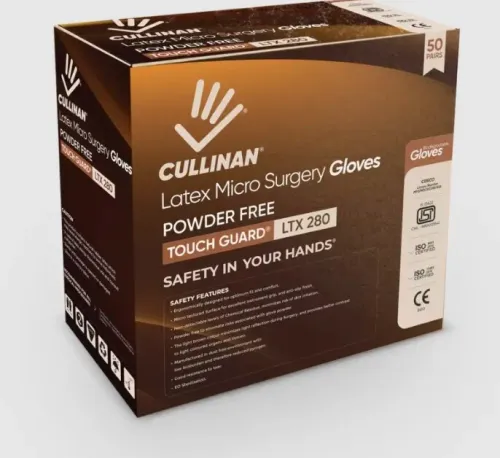
 | Cullinan Surgical Gloves Cullinan Surgical Gloves - Powder Free Our powder free surgical gloves are crafted from premium natural rubber latex, offering superior dexterity, comfort, and reliable protection for... View product → |
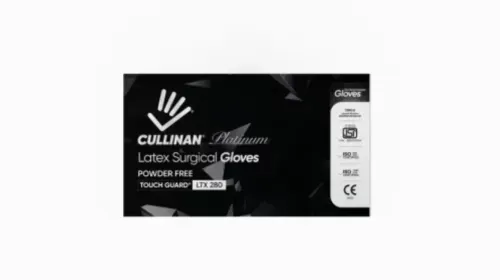
 | Cullinan Platinum Surgical Gloves - Powder Free Are you searching for Platinum Surgical Gloves Manufacturer in India Then AK Health Tech is Best Choice for you Platinum Surgical Gloves Powder Free. View product → |
Frequently asked questions
What makes a powder-free glove suitable for delicate gynaecological surgery?
Check fingertip sensitivity, consistent thickness, secure fit, dexterity, tear resistance and low extractable residue. Powder-free status alone does not establish microsurgical suitability.
How can you verify that a glove is truly designed for microsurgery?
Ask for the product specification and test evidence covering dimensions, thickness, tensile strength, elongation, dexterity and tactile performance. Confirm that the intended use includes delicate or microsurgical procedures.
Should you choose latex, powdered latex or powder-free nitrile?
Do not choose powdered latex for delicate surgery when powder contamination or tissue adhesion is a concern. Compare powder-free latex and nitrile for tactile feel, elasticity, allergy controls, fit and resistance to the chemicals used in your theatre.
How should you check finishing, sizing and sterile packaging before use?
Inspect the cuff, fingers, seams and surface for defects; compare the marked size with the wearer’s hand; and check the sterile barrier, expiry date, lot number and package seal before opening.
What evidence should a surgical centre request before approving the glove?
Request the technical data sheet, certificate of analysis or lot-release record, sterility information, biocompatibility evidence, quality-system documentation, applicable conformity records and a process for handling complaints and recalls.
Keywords