A product name does not tell a surgical centre how many pairs arrive, whether they are sterile, or whether the fit suits each surgeon. By checking the pack configuration, sterile-barrier label, material, sizing, cuff, surface and traceability details, you can turn an unclear quotation into an order your receiving and operating-room teams can verify.
Key takeaways
- Confirm whether each quoted unit means one sterile pair, box, or master carton.
- Check the sterility statement, standard, expiry date, batch number and lot records.
- Specify glove size, cuff length, surface finish and powder-free status before ordering.
- Treat latex content and allergy controls as separate purchasing decisions.
Start with the pair count and sterile-pack configuration
Expect a quoted quantity of matched glove pairs, not a contents list created by the product name. “Micro surgery glove” does not establish whether the unit is one pair, a retail box containing multiple pairs, or a master carton.
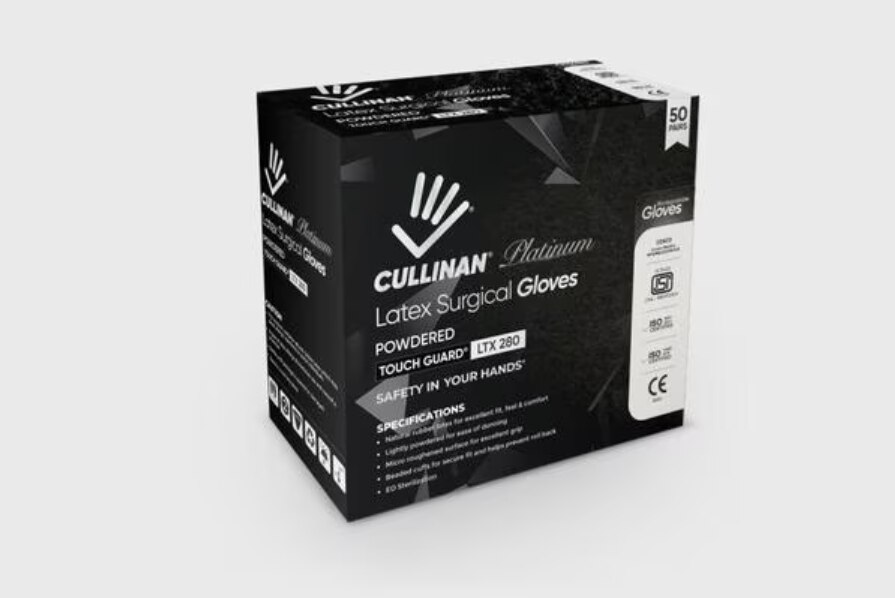
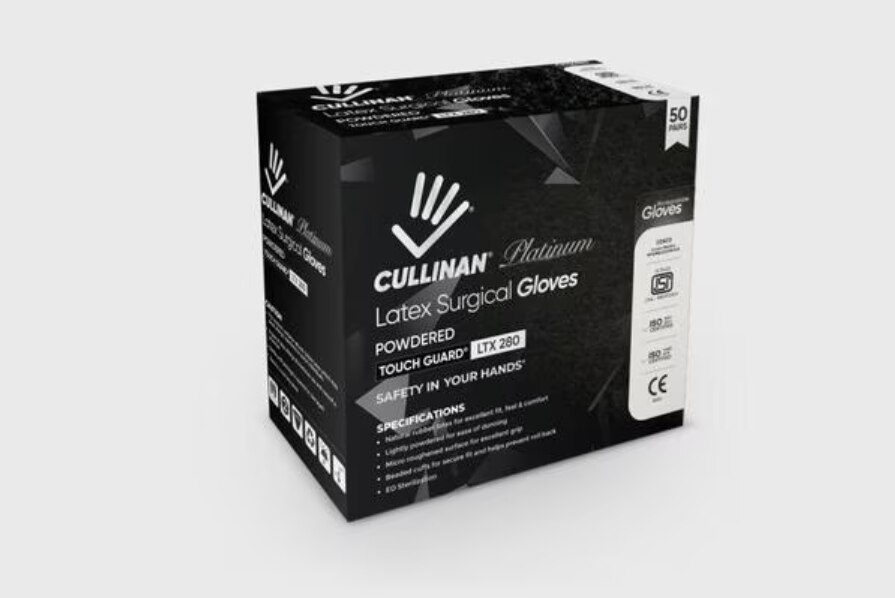
The usual sterile arrangement is one matched pair folded into an inner sterile wrap or pouch, followed by an outer peel pouch or carton. Do not assume the unspecified Cullinan pack follows this arrangement: “pack of 50” can mean 50 pairs, not 50 individual gloves.
Put these details in the quotation:
- State the total pair quantity, size mix, and whether each pair is individually wrapped.
- Identify the inner sterile wrap or pouch and the outer peel pouch or carton.
- State whether the gloves are sterile and whether the quoted unit is a pair, box, or master carton.
- List surgical instruments, drapes, glove liners, inner gloves, and sterile gowns separately; none is included unless named on the quotation.
- Record polymer, powder-free status, size, cuff design, applicable standard, lot number, expiry date, and sterilization status.
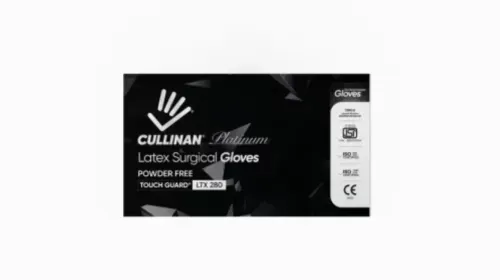
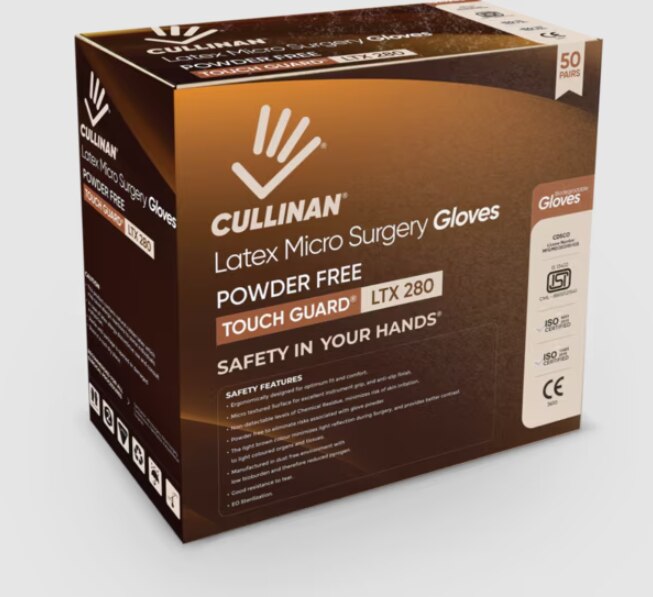
This is what are included with Cullinan micro surgery gloves in Noida should mean in purchasing terms: verified contents, not a guess based on the name. The phrase powder free micro surgery gloves contents describes the glove and its pack, not an accessory bundle.
At receiving, count cartons and pairs, inspect peel seals and pouch punctures, and check label legibility. Reject or quarantine wet, opened, or damaged packaging.
Confirm sterility, standard and lot traceability before acceptance
1. Treat a glove as suitable for sterile surgery only when the product data sheet and sterile-pack label state “sterile,” not merely “surgical.” For sterile packs, record the sterilization method, such as radiation sterilization when that method is used. A search for cullinan micro surgery glove details cannot replace this evidence.
2. Check both documents for the glove type, applicable standard, lot or batch number, manufacture date, expiry date and sterile-barrier condition. Require ISO 10282 for single-use sterile surgical gloves; ISO 11193-1 applies to single-use medical examination gloves.
The quotation must identify which standard covers the supplied product, so micro surgery gloves for surgical centres are not substituted with examination gloves.
3. Ask for the manufacturer’s barrier-integrity result or acceptable quality limit (AQL), the test method, and ASTM D3577 documentation where relevant to rubber surgical gloves. These records address holes and physical performance; “surgical grade” does not. Sterility belongs to one sealed pack and its lot, not permanently to the glove material.
4. At receiving, match carton quantity, pair count, size, lot, sterilization status and expiry with the purchase order. Inspect label legibility, seals and pouch condition, then quarantine any wet, opened or punctured pack. An unexpired date does not make a damaged sterile barrier acceptable. Record the carton-to-pack lot link for traceability.
Match glove size, cuff and surface to the surgeon’s working technique
Do not infer size, palm dimension, finger length, cuff length or half-size availability from the name. Treat “cullinan micro surgery glove details” as a search label, not a specification. Ask for the sizing method, size chart, palm measurements, fingertip fit and any hand-specific anatomical shaping.
Record each surgeon’s usual size and trial representative pairs before ordering; a loose fingertip disrupts fine instrument control, while an undersized glove increases fatigue and failure risk.
| Feature | Confirm in writing | Practical consequence |
|---|---|---|
| Smooth surface | Fingers and palm are smooth | Preserves a different tactile feel |
| Textured surface | Texture covers the fingers, palm or both | Can improve grip on wet instruments |
| Cuff construction | Beaded, straight, extended, textured or another design | Shows how the cuff sits under a sterile gown |
| Thickness claim | Millimetres, measurement location and comparison product | Reveals whether “10% thinner” means fingertip, palm, cuff or average thickness |
For micro surgery gloves for surgical centres, require these questions before approval:
- What are the cuff length and construction, and does the cuff resist roll-down beneath a sterile gown?
- Are the fingers and palm smooth or textured, and is the surface compatible with the surgeon’s tactile requirements?
- What validated fit evidence supports each size, including fingertip clearance and hand-specific shaping?
- What exact thickness, in millimetres, was measured at each location, and which comparison product supports the 10% figure?
Texturing does not compensate for poor fit. A trial pair exposes that failure before a full order does.
Separate powder-free handling from latex and allergy decisions
Powder-free means no powder was intentionally used as the donning lubricant. It does not mean latex-free, protein-free, accelerator-free or residue-free. Therefore, powder free micro surgery gloves contents must be assessed beyond the lubricant claim.
Require the polymer to be named: natural-rubber latex, nitrile or polyisoprene. Ask whether donning is supported by a polymer coating, chlorination or another treatment, and request controls for residual latex proteins and relevant accelerator chemicals.
| Polymer | Elasticity and working feel | Allergy implications |
|---|---|---|
| Natural-rubber latex | High elasticity and familiar tactile response; tear behaviour depends on formulation | Natural-rubber-latex sensitivity and residual-protein exposure require control |
| Nitrile | Firm response with strong puncture and tear resistance; less elastic than latex | No natural-rubber latex, but accelerator chemicals still require review |
| Polyisoprene | Latex-like elasticity and tactile response | No natural-rubber latex proteins, but additives and accelerators still require review |
For staff or patients with natural-rubber-latex sensitivity, ask whether a validated nitrile or polyisoprene microsurgical alternative is available. Record that choice in the procedure’s procurement specification; cullinan micro surgery glove details alone do not establish a synthetic material.
Confirm that the quotation identifies a sterile surgical glove under ISO 10282, not a powder-free examination glove under ISO 11193-1. Ask for the polymer, sterile status, applicable standard, accelerator information and latex-protein controls on the data sheet and pack label.
Put every required detail on the Noida purchase specification
A micro surgical glove order in Noida is complete only when every pack claim appears in writing. The phrase “microsurgery glove” does not define what are included with cullinan micro surgery gloves in noida, and Ak Health Tech Private Limited should be assessed against the same evidence-based specification as any supplier.
| Item | Write into quotation and receiving check |
|---|---|
| Glove identity | Surgical glove; named polymer; powder-free; sterile or non-sterile |
| Standard | ISO 10282 for sterile surgical gloves, or ISO 11193-1 for examination gloves |
| Pack contents | Matched pair quantity; size mix; individually wrapped inner sterile barrier; outer pouch or carton |
| Fit and finish | Size chart and sizing method; cuff length and construction; smooth or textured surface |
| Thickness | Millimetres, measurement location—fingertip, palm, cuff or average—and comparison product for any reduction claim |
| Barrier | AQL value or named barrier-integrity requirement, with test method or result |
| Sterilization | Method, such as radiation sterilization, when supplied sterile |
| Traceability | Lot or batch number, manufacture date, expiry date and shelf-life period |
| Transport | Agreed delivery-temperature range and protection from wet or damaged cartons |
| Replacement | Written replacement or credit terms for opened, punctured, wet, damaged or short-delivered packs |
Before approval, request the product data sheet, a sample sterile-pack label and the current quotation. At receiving, match size, pair count, lot, expiry, seal and carton quantity to the purchase order; quarantine any opened or punctured pouch. Surgical instruments, drapes, liners and gowns are excluded unless separately listed.
Related product
 | Cullinan Micro Surgery Gloves - Powder Free Premium Latex Micro Surgical Gloves Powder Free Designed for precision, our latex powder-free micro surgery gloves feature a narrow thickness for... View product → |
Frequently asked questions
What should a Noida surgical centre confirm about glove pack contents?
Ask the supplier to state the number of matched pairs per sterile pouch, the number of pouches per box, and the number of boxes per master carton.
Which details confirm sterility and traceability before acceptance?
Check the sterile-pack statement, applicable standard named on the documentation, expiry date, batch or lot number, manufacturer details and matching delivery records.
How should surgeons choose micro surgery glove size and cuff?
Use the surgeon’s measured hand size and working technique, then specify the required size range, cuff length, surface texture and tactile preference on the purchase order.
Does powder-free mean latex-free?
No. Powder-free describes the glove finish; latex-free describes the glove material. Request a separate material declaration and allergy-control information.
Keywords